Project Overview
My Role
Problems
Goals
NEXORA
B2B SaaS Operations & Automation Platform
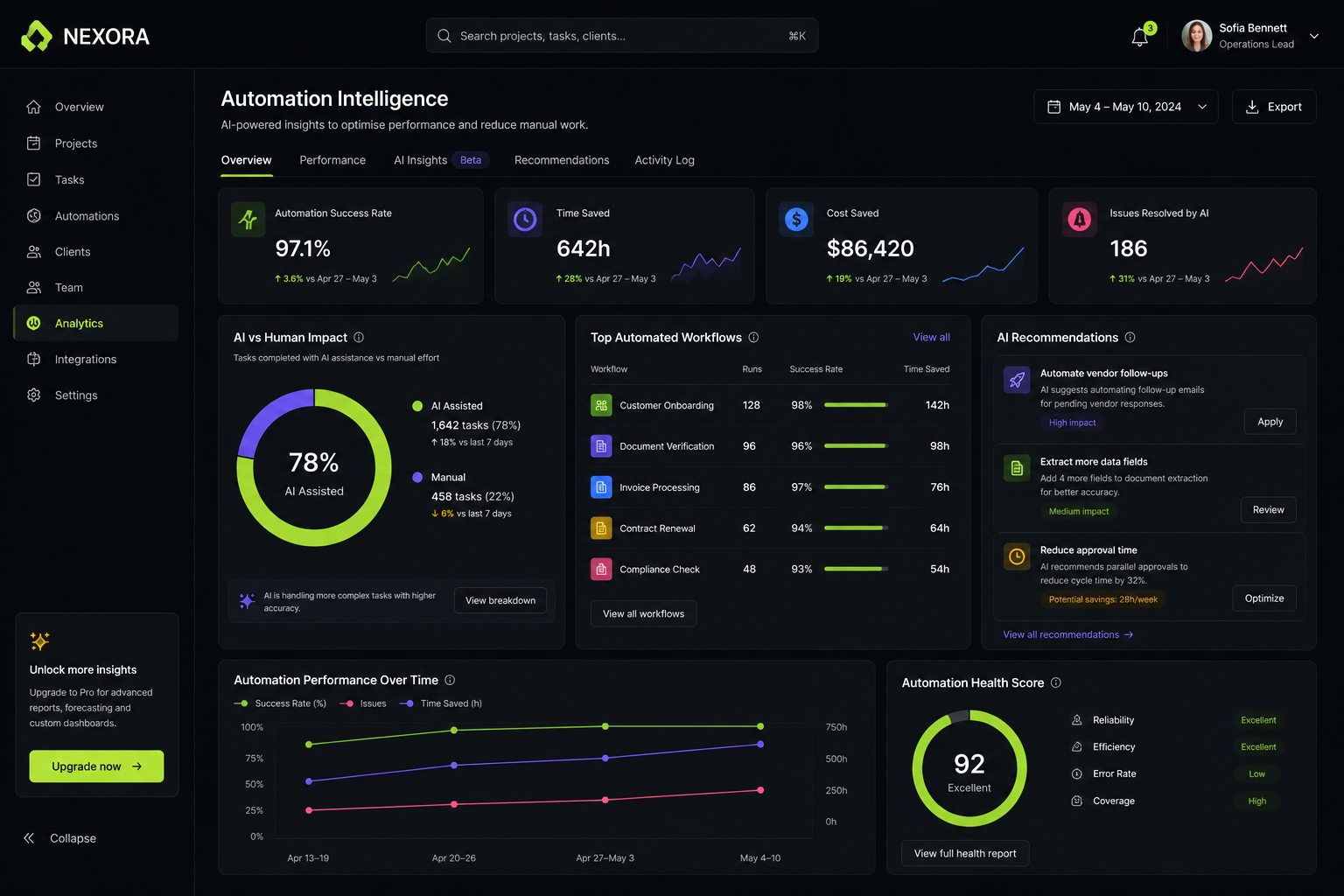
NEXORA is a B2B SaaS platform designed to help teams manage complex operations, automate repetitive workflows and understand business performance from one central workspace.
The product brings workflow automation, AI-assisted decision-making and operational analytics together, helping teams reduce manual work while maintaining visibility and control.
Research Product Design UX/UI Design Strategic Design Design Systems
Fragmented Health Data
Users often have health information spread across multiple devices and applications, making it difficult to see the bigger picture.
Complex Information
Large amounts of health data can be difficult to understand without clear context or meaningful interpretation.
Limited Personalisation
Generic health metrics don't always help users understand what their data means specifically for them.
Simplify Health Data
Turn complex metrics into clear, digestible information that users can understand quickly.
Create Personalised Insights
Use AI to identify patterns and provide insights that feel relevant to each user's health and lifestyle.
Encourage Better Decisions
Transform passive tracking into actionable guidance that helps users make informed choices.

Design Approach
Colours

Typography
Visual Direction
A soft, calming palette of lavender, white, mint and deep navy was chosen to create a sense of trust while giving the product a modern, technology-driven identity.
Lavender and purple communicate intelligence and innovation, while mint introduces a sense of wellbeing and positive progress.
Highlight
Purple is used to emphasise primary actions, health scores and AI-powered features, creating a consistent visual connection between intelligence and interaction.
Design Rationale
The colour system balances healthcare credibility with the visual language of modern technology, creating an experience that feels sophisticated without becoming clinical or intimidating.
Modern & Precise
A clean geometric sans-serif typeface was selected to give NEXORA a contemporary B2B SaaS identity while maintaining a professional tone.
Readability & Hierarchy
Strong typographic hierarchy differentiates navigation, metrics, workflow information and supporting content. Clear weight and size variations allow users to scan dense operational information quickly without feeling overwhelmed.
Design Rationale
The typography supports NEXORA's core principle: complex systems should feel simple to navigate.
Outcomes
Personal Discovery
AI-Powered Insights
Design Systems
Operational Efficiency
NEXORA was designed to reduce repetitive manual work by bringing automation directly into everyday operational workflows.
Greater Visibility
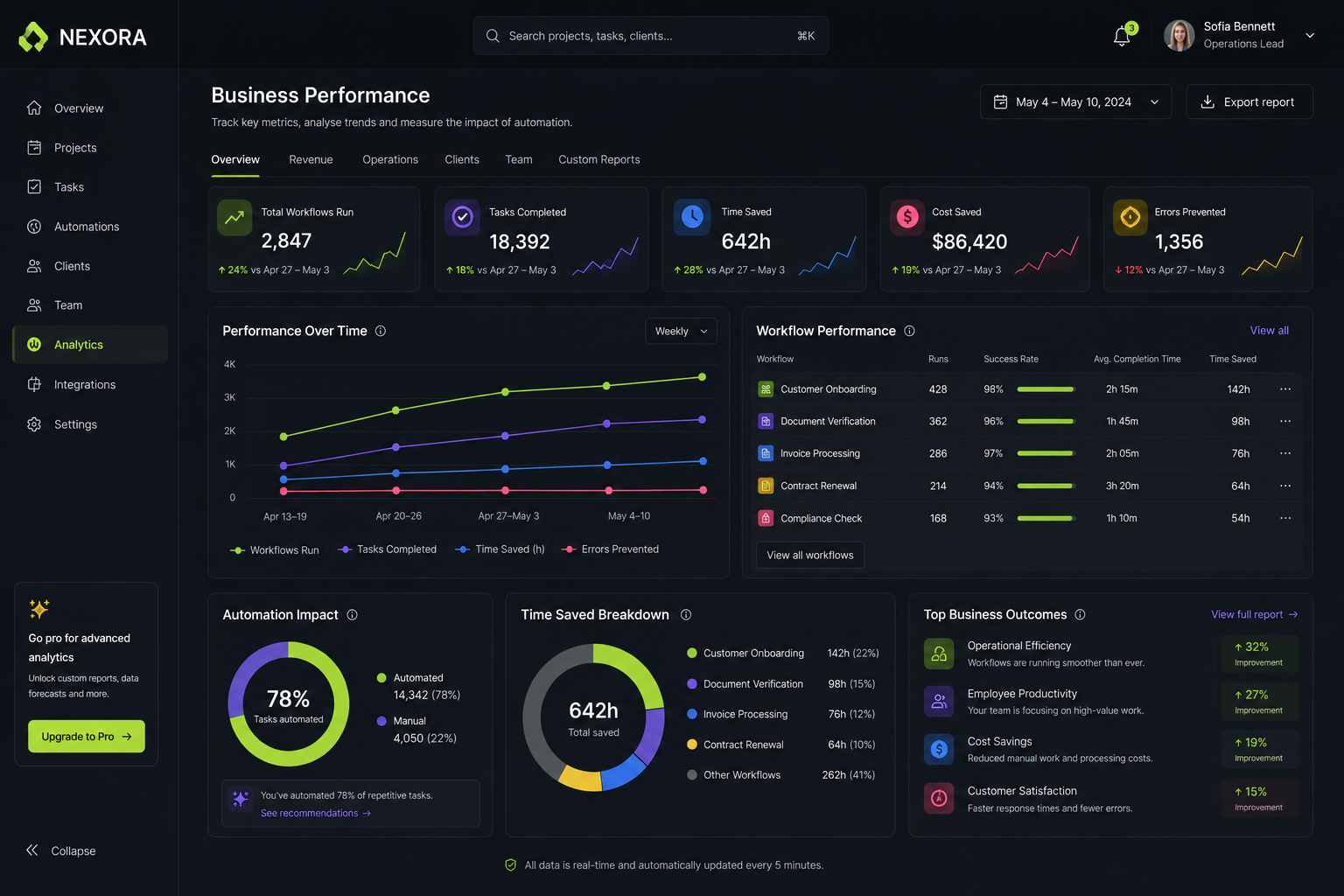
Centralising workflow activity, performance data and AI insights gives teams a clearer understanding of where work is progressing and where intervention is needed.
Scalable Product Foundation
The introduction of a reusable design system creates a foundation that can support additional workflows, features and product areas as NEXORA grows.
A More Human Approach to Automation
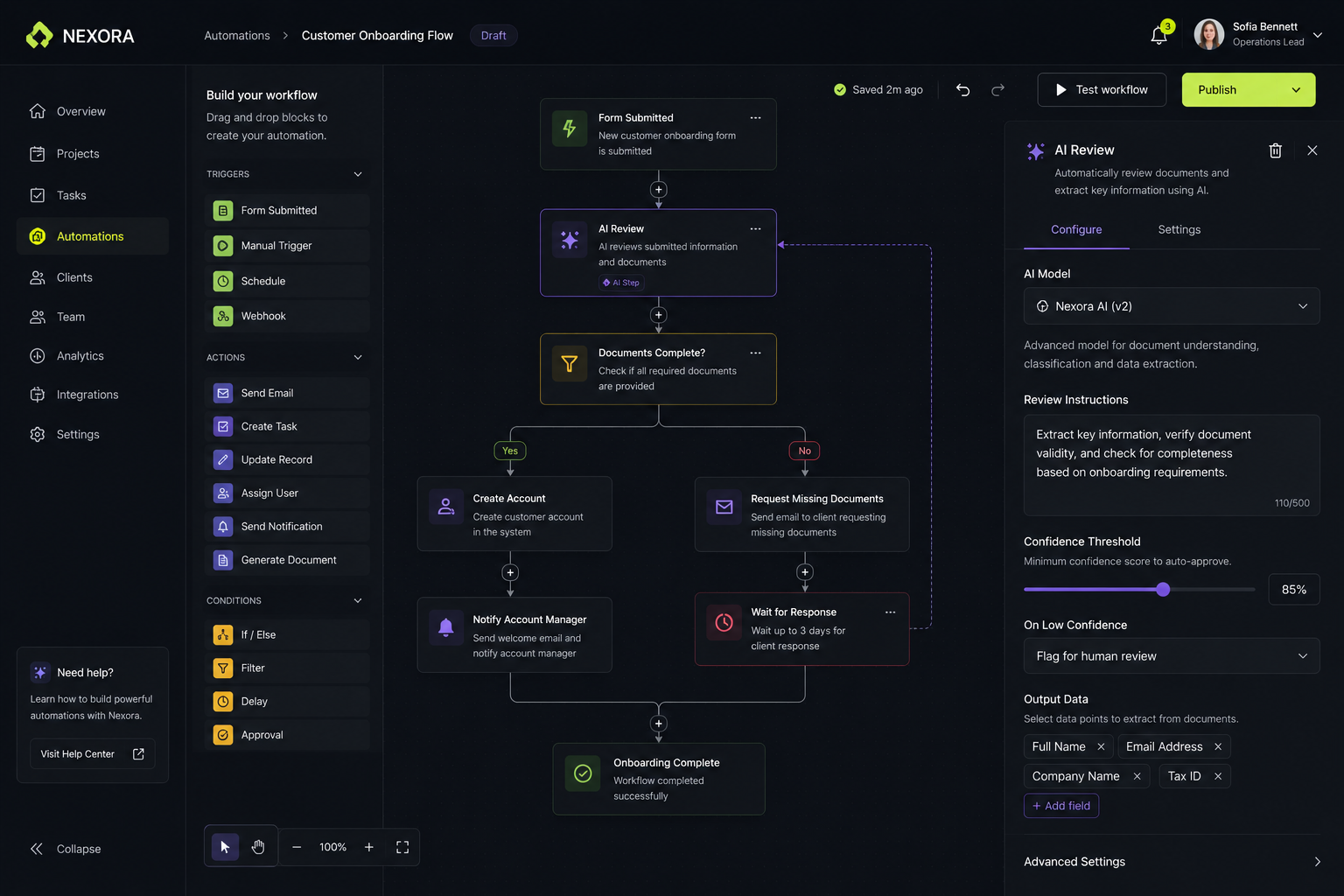
Rather than hiding automation behind the interface, NEXORA makes system behaviour understandable and gives users clear opportunities to review, adjust and intervene.
Keeping Automation Understandable
A key design challenge was making AI-powered automation feel powerful without making users feel like they've lost control.
NEXORA, therefore, makes system behaviour visible through:
AI activity → Confidence → Decision → Human review
Users can see what the AI has done, configure confidence thresholds and route uncertain outcomes to a human for review.
This creates a balance between automation and accountability.
Built for Scale
Because NEXORA contains multiple workflows, dashboards and data-heavy experiences, a scalable design system was established rather than designing each screen independently.
The system includes:
Reusable components
Buttons & controls
Status indicators
Cards & data tables
Form elements
Navigation patterns
Workflow nodes
AI interaction patterns
Responsive layouts
Why
The system creates consistency across the platform while allowing new features and workflows to be introduced without reinventing the interface each time.
Screens